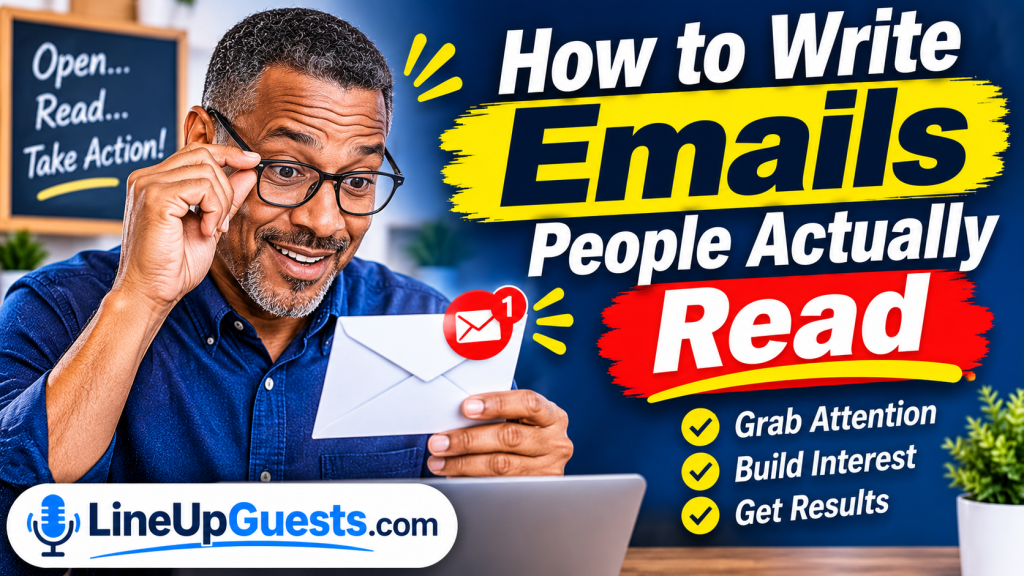
How to Write Emails People Actually Read: 9 Copywriting Secrets That Get Attention
Let’s face it: Most people don’t wake up excited to read marketing emails.
They wake up to dozens of unread messages, promotional offers, business updates, newsletters, and sales pitches competing for their attention.
Some emails get opened. Others get ignored. And plenty get deleted before the recipient even finishes reading the subject line.
So what separates an email people actually read from one that disappears into the trash?
It’s not necessarily the length of the email. It’s how well you understand the person receiving it.
Great email copywriting isn’t about using complicated words, sounding intelligent, or trying to impress people with clever marketing language.
It’s about understanding what your audience wants, capturing their attention, and giving them a reason to keep reading.
If you want people to read your emails, here are nine principles worth mastering.
1. Write Subject Lines That Create Curiosity
Your email could contain the most valuable information in the world, but if nobody opens it, that information doesn’t matter.
The subject line is your first opportunity to earn attention.
Instead of writing something generic like:
“Check Out Our Latest Marketing Tips”
Try something that creates curiosity:
“Why Your Marketing Isn’t Producing More Customers”
The second subject line introduces a problem that your audience might already be experiencing.
Other examples:
- The Biggest Mistake You’re Making With Your Emails
- Are You Losing Customers Without Knowing It?
- Here’s Why Your Competitors Are Getting More Attention
- One Simple Change That Could Improve Your Sales
The goal isn’t to trick people into opening your emails. It’s to give them a compelling reason to discover what’s inside.
 2. Stop Writing Like a Corporation
One of the biggest mistakes businesses make is writing emails that sound like corporate announcements.
People don’t want to feel like they’re reading a company brochure.
They want to feel like they’re having a conversation.
Compare these two approaches:
Corporate approach:
“We are pleased to announce the introduction of our newest marketing solution designed to improve operational efficiency and enhance business productivity.”
Conversational approach:
“What if you could spend less time managing your marketing and more time finding customers?”
Which one would you rather read?
Your emails should sound natural, clear, and human.
Write the way you would explain something to a customer sitting across the table from you.
3. Focus on the Reader, Not Your Business
Here’s a simple copywriting lesson:
Your customers are generally more interested in solving their problems than hearing about how great your company is.
Yet many marketing emails spend most of their time talking about the business.
“We’ve been in business for 15 years.”
“Our company offers industry-leading solutions.”
“We’re excited about our newest product.”
There’s nothing inherently wrong with sharing those details, but they shouldn’t dominate your message.
Instead, focus on what matters to the reader.
What problem are they experiencing?
What do they want to accomplish?
What is preventing them from getting there?
When your emails address those questions, your message becomes more relevant.
Remember: Your product might be the hero of your business, but your customer should be the hero of your marketing.
4. Use Stories to Make Your Emails More Interesting
Facts can educate people. Stories can make people care.
Think about the last time you heard a story that really caught your attention.
You probably wanted to know what happened next.
That same principle works in email marketing.
Instead of immediately pitching a product, introduce a situation your reader can recognize.
For example:
“Last year, I spoke with a business owner who was spending hours every week sending emails to potential customers. He had a great product, but his messages weren’t generating responses. The problem wasn’t his product. It was how he was communicating its value.”
Now you have a reason to continue reading.
Stories help readers connect with your message because they can recognize themselves in the situations you’re describing.
Use personal experiences, customer stories, lessons learned, and relatable business challenges.
Just make sure your stories are genuine.
5. Make Every Sentence Earn Its Place
Long emails aren’t automatically bad.
Some of the most effective sales emails are several paragraphs long.
The problem isn’t length. It’s unnecessary words.
If a sentence doesn’t educate, entertain, persuade, build trust, or move the reader toward an action, consider removing it.
For example:
“At our company, we strongly believe that it is extremely important for business owners to understand the value of implementing an effective email marketing strategy.”
Could become:
“Every business needs an email strategy that turns subscribers into customers.”
The second version communicates the idea faster.
Good copywriting is often about removing words rather than adding them.
6. Sell the Outcome, Not Just the Product
People don’t buy products simply because they exist.
They buy because they believe those products can help them achieve something.
A business owner doesn’t necessarily want email marketing software.
They want more customers, stronger relationships, and more sales.
A person purchasing a productivity tool doesn’t simply want another application.
They want to save time and get more done.
This is where understanding buyer psychology becomes important.
Instead of focusing entirely on features, explain the outcomes.
For example:
Feature: Automated email sequences.
Benefit: Follow up with potential customers without manually sending every message.
Desired outcome: Spend less time chasing prospects while keeping conversations moving.
The closer your message gets to the outcome your reader wants, the more meaningful it becomes.
7. Make Your Emails Easy to Read
People often read emails while multitasking.
They’re checking messages between meetings, looking at their phones, or quickly scanning their inboxes.
Don’t make reading your emails feel like homework.
Use:
- Short paragraphs.
- Clear language.
- Descriptive headings when appropriate.
- Bullet points for important information.
- Plenty of breathing room.
- A logical flow from beginning to end.
Avoid unnecessary jargon and complicated explanations.
Your job isn’t to make readers work harder to understand your message.
Your job is to make understanding your message effortless.
8. Give Readers One Clear Call to Action
Imagine receiving an email that asks you to:
Visit a website, download a report, schedule a meeting, watch a video, follow a social media account, and purchase a product.
That’s a lot of decisions.
Too many competing calls to action can create confusion.
Decide what you want the reader to do next.
Do you want them to:
- Reply to your email?
- Visit your website?
- Schedule an appointment?
- Read an article?
- Purchase a product?
- Register for an event?
Make the next step obvious.
A strong call to action doesn’t need to be complicated.
Sometimes, “Reply to this email and let’s talk” is all you need.
9. Test, Measure, and Improve Your Emails
Good copywriters don’t assume they know everything.
They test.
They experiment with subject lines, opening sentences, offers, calls to action, and different approaches to communicating value.
Pay attention to:
- Open rates, while remembering that privacy features can make them imperfect.
- Click-through rates.
- Replies and meaningful conversations.
- Conversions and sales.
- Unsubscribes and spam complaints.
Don’t just ask whether people opened your email.
Ask whether the email accomplished its purpose.
An email with thousands of opens but no meaningful business results may not be as successful as a smaller campaign that generates qualified leads and customers.
The goal is not simply to get attention.
The goal is to turn attention into action.
The Real Secret: Write for People, Not Inboxes
Email marketing is still one of the most valuable ways businesses can communicate directly with their audiences.
But sending more emails doesn’t automatically produce better results.
Sending better emails starts with understanding the person on the other side of the screen.
Know their problems. Understand their desires. Respect their time. Communicate clearly. Give them something worth reading.
You don’t need to sound like a marketing genius.
You need to understand what makes people pay attention, what motivates them, and what makes them take action.
That’s the difference between simply sending emails and actually communicating.
And that’s what separates average email copywriting from persuasive email copywriting.
Final Thoughts
Before you send your next marketing email, ask yourself five questions:
- Does my subject line give people a reason to open it?
- Does my opening sentence make them want to continue?
- Am I addressing something my audience actually cares about?
- Is my message clear, interesting, and easy to read?
- Have I given the reader a compelling next step?
If you can answer yes to those questions, you’re already thinking like a better email copywriter.
Remember: People don’t owe your emails their attention. You have to earn it.
That’s the foundation of great email marketing.
— Lopaze Lasane
Direct-Response Copywriter & Marketing Strategist
Visit LopazeLasane.com for more insights on copywriting, persuasion, and marketing strategy.